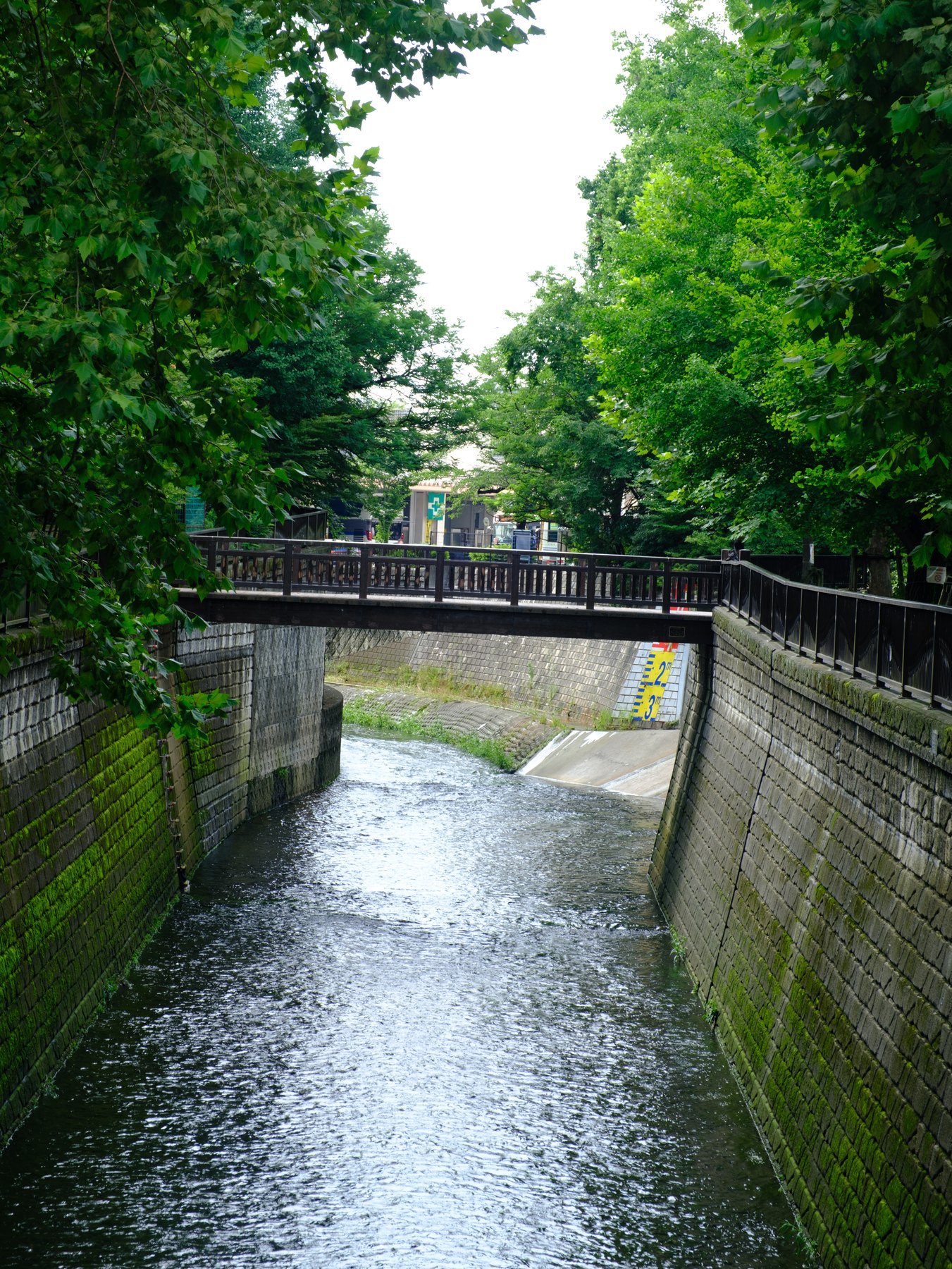
Rainy Tokyo is often reduced to saturated signs on wet pavement. That image can be effective, but it is only one part of the city’s weather.
Look for behavior and depth: umbrellas compressing a sidewalk, a cyclist waiting under cover, softened buildings, darker tree bark, and warm windows against an overcast street.
Work at the edge of shelter
Station entrances, arcades, awnings, and covered shopping streets give you a dry working position and layers of movement entering the rain. Avoid blocking the path while you wait.
Photograph both directions. Looking outward reveals rain and distance; looking inward shows wet people entering warmer light.
Use reflections as structure
A reflection is strongest when it supports a subject or repeats a meaningful shape. Lower the camera only when the foreground adds a second layer; empty wet pavement does not need to dominate every frame.
Small pools, curb edges, and dark asphalt often carry cleaner color than a wide glossy street.
Include the ordinary city
Residential streets, bicycles, convenience-store light, plants, and delivery movement create a more specific sense of place than neon alone. Stay in one area long enough for repeated details to form a set.
Respect people who are managing umbrellas, bags, and limited space. Distance and context usually make stronger photographs than a sudden close encounter.
Keep the grade atmospheric
Preserve the lowered contrast of distant rain and control only the highlights that distract. Quieter greens and moderate saturation keep foliage and reflections believable.
Review the series for repeated color decisions. A restrained look allows one red umbrella or warm doorway to carry more weight.