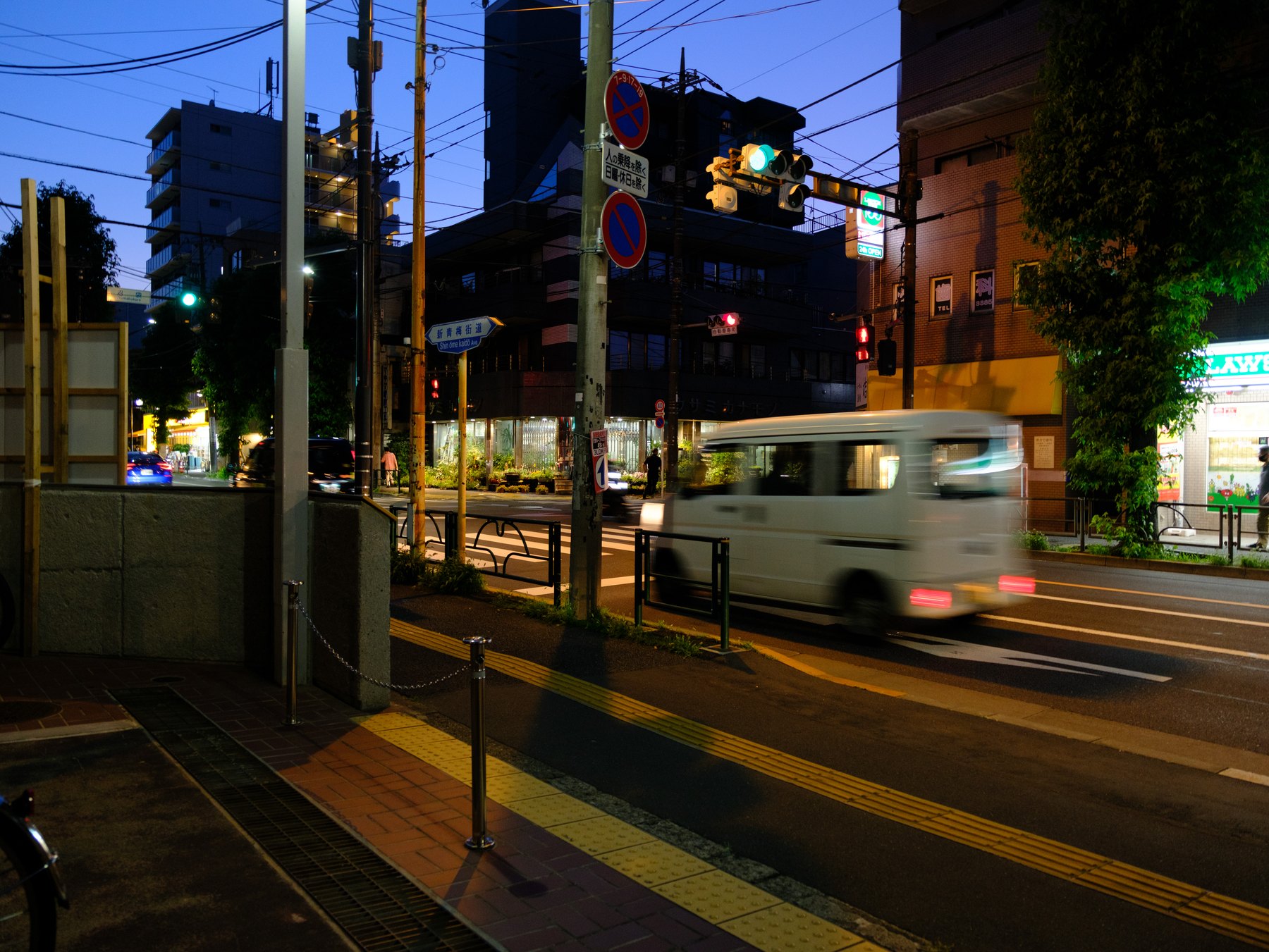
Fujifilm cameras let you save multiple Auto ISO configurations with a default sensitivity, maximum sensitivity, and minimum shutter speed. Use those slots for subject behavior instead of creating one setting for every location.
A minimum shutter speed is a preference, not an absolute floor in every exposure condition. Watch the selected values when light falls beyond the configured range.
Preset one: general daylight walking
Start near base ISO, set a maximum around ISO 3200, and use 1/250 second when pedestrians and gestures matter. A slower 1/125 setting is reasonable for calmer scenes or wider lenses.
In Aperture Priority, choose depth of field and let ISO react as streets move between sun and shade. Exposure compensation remains available for bright walls or deep shadow.
Preset two: quiet scenes and lower light
Use 1/60 or 1/125 for still architecture, interiors, or deliberate pauses, with a maximum around ISO 6400. Stabilization can reduce camera shake but cannot freeze a moving person.
Switch to the faster preset when the subject changes. The point of saved configurations is to avoid rebuilding limits while the moment disappears.
Preset three: people at night
Use 1/125 as a practical beginning and raise the maximum to ISO 6400 or 12800 when getting the moment matters more than perfectly clean shadows. Faster motion may require 1/250.
Review faces at full size. Bright signs can make the frame appear sharp and well exposed while the person is blurred or too dark.
Know when to leave Auto ISO
Manual exposure with Auto ISO is useful when shutter speed and aperture must remain fixed. Fully manual ISO helps when light is stable and a sequence must stay identical.
Whatever the mode, expose the subject deliberately. Auto ISO removes one adjustment; it does not decide what the photograph is about.