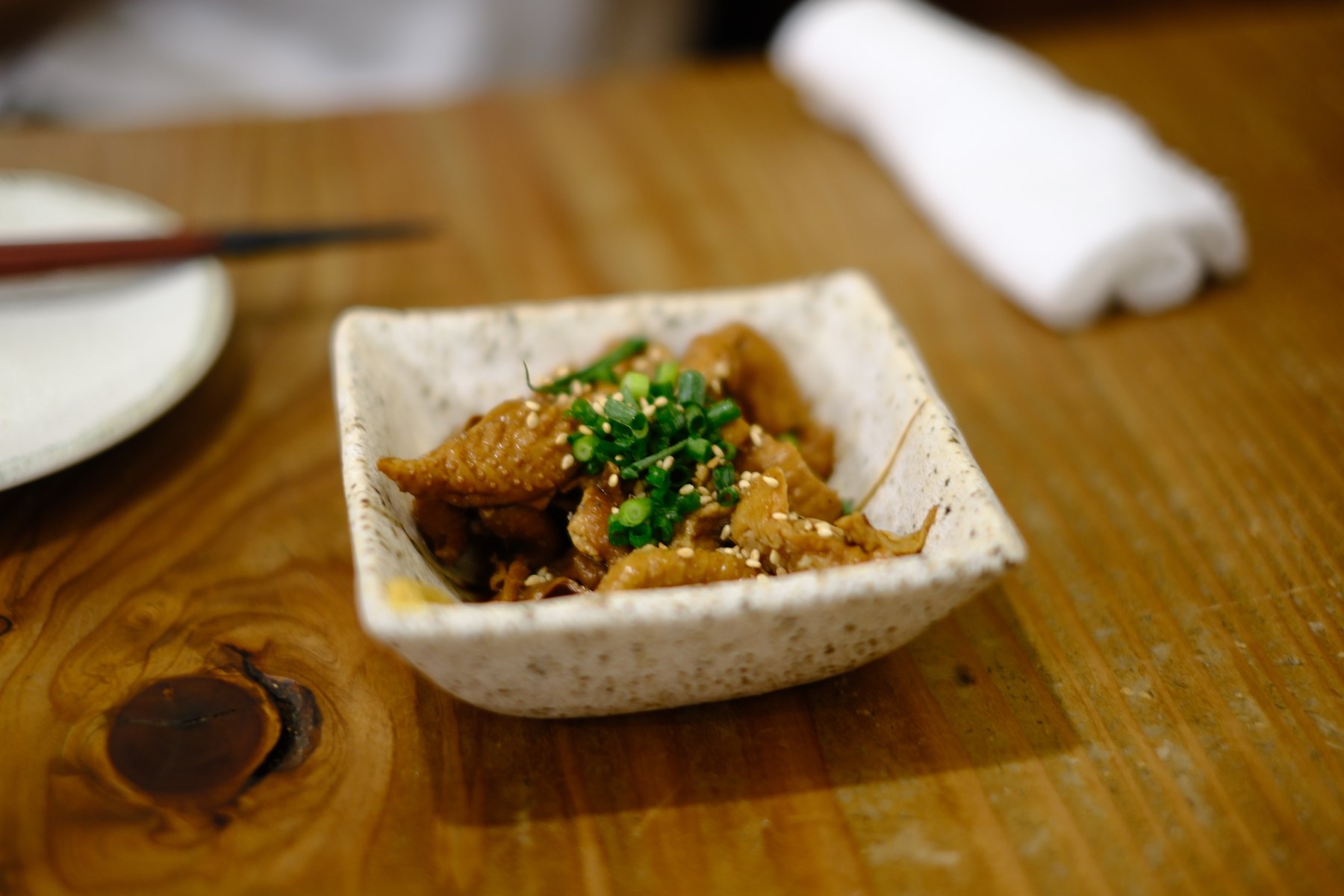
Shallow depth of field does not automatically simplify a restaurant scene. Bright shapes remain visible after they blur, and objects touching the frame edge can pull attention away from the dish.
Solve the largest distraction with position first. A small move may place a bright towel behind a darker object, remove a partial plate, or give the dish cleaner space.
Inspect all four edges before pressing the shutter
Look for partial plates, chopsticks, menus, and highlights that enter without explaining the meal. Move the camera or ask before moving anything that belongs to the restaurant.
Keep one environmental cue when it adds place. Simplification should not turn every meal into an anonymous studio photograph.
Control brightness as well as focus
A blurred white towel can attract more attention than a sharp brown dish. Reframe so the brightest background patch supports rather than competes with the subject.
Exposure compensation can help position the overall frame, but it cannot change the brightness relationship created by the actual light.
Use masks after composition is settled
In Lightroom, a gentle background mask can reduce exposure or texture without making the surroundings look cut out. Refine around the bowl rather than accepting a rough automatic edge.
Avoid heavy blur as a rescue. If the background needs to disappear completely, the capture position may be the more honest fix.
Export for the way the image will be seen
At small social or marketplace sizes, the dish may lose separation sooner than expected. Check the final crop and make sure the main shape remains clear.
Do not oversharpen the garnish merely to compensate for a busy frame. Edge control and tonal hierarchy should carry the image first.
Sources and further reading
References for the context and techniques discussed in this field note.