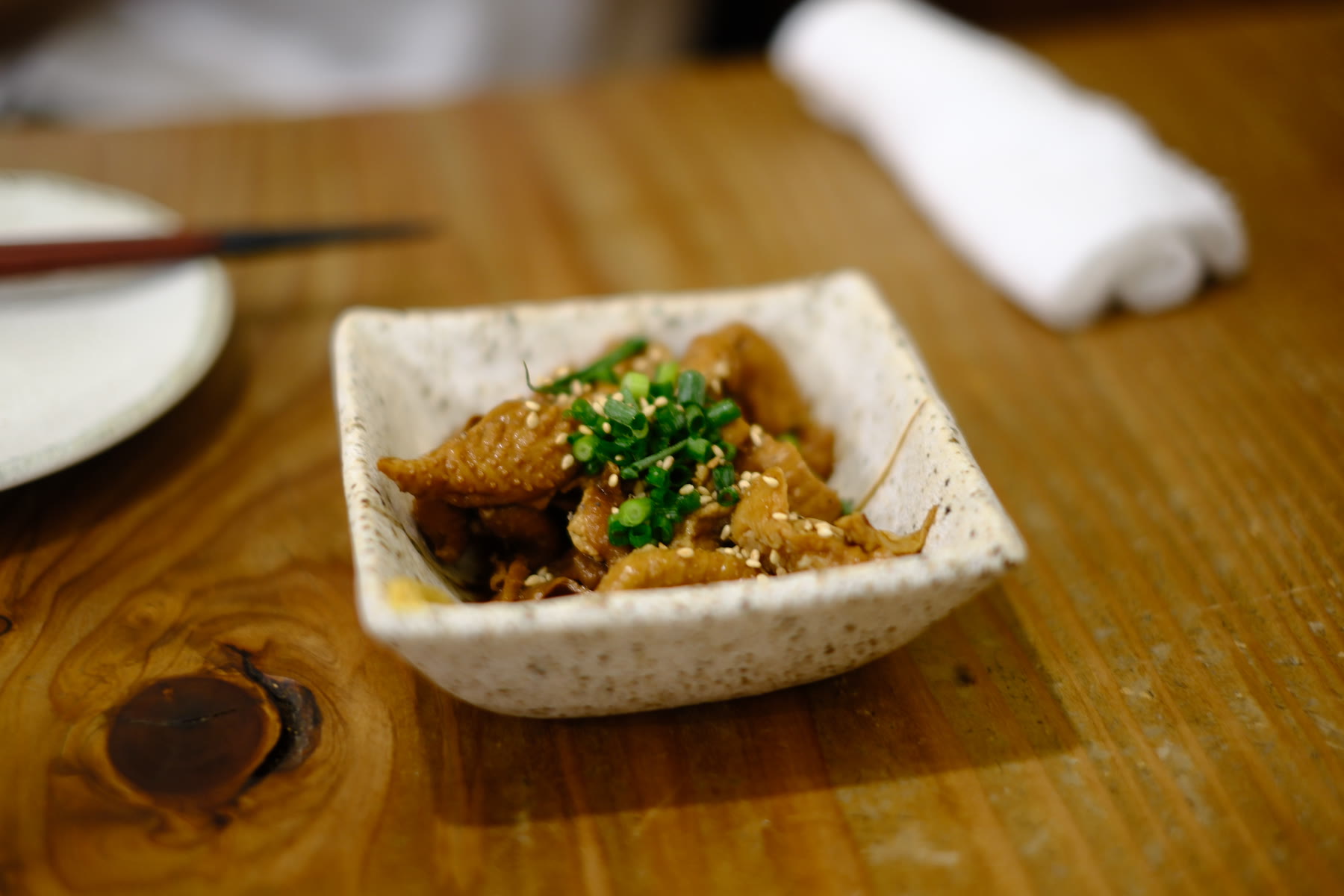
A wide aperture can separate a small dish from a busy room, but it can also leave the back half of the meal soft. The first question is what the viewer should recognize: a garnish, the dish as a whole, or the relationship between the plate and restaurant.
In a dim room, aperture, shutter speed, and ISO compete. Choose focus and acceptable motion first, then allow the background to be as sharp or soft as the story requires. Do not use a shallow-depth-of-field setting merely because the light is low.
Find a single visual anchor
Move enough to remove a distracting napkin or bright edge from behind the meal, but respect the space and other diners. Focus on the garnish or the most descriptive part of the food, then check whether the front and rear of the dish still read together.
If too little of the food is sharp, stop down one step and test again. ISO noise at web size is often less damaging than a key ingredient outside the focal plane. A smaller aperture requires either a slower shutter or higher ISO, so inspect both trade-offs.
Keep the camera still and the scene honest
Support your elbows and take a short series when you cannot use a tripod. Choose a shutter speed suitable for your own handholding and any movement in the scene; a server’s hand or steam may need a faster frame than a stationary plate.
Avoid rearranging a restaurant’s objects without permission. A clean composition can come from a lower camera angle, a small shift of position, or waiting for a bright background object to move.
Do not confuse focus falloff with an editing defect
In Lightroom, first choose the frame with the best subject focus. Add exposure and white balance adjustments for the food and its light. Neither Texture nor sharpening can bring an intentionally blurred background or missed focal plane into true focus.
Use local masking sparingly to direct attention to the dish. Excessive Clarity on food can exaggerate grease, crumbs, and hard edges. Check the web export at its final size.
Compare two useful frames
Make one close frame focused on the descriptive detail and one wider frame that includes the setting. Decide which answers the viewer’s likely question: “What was served?” or “What did this place feel like?”
A preset can connect the series through tonal direction, but keep exposure, focus choice, and food-specific white balance under your control.
Sources and further reading
References for the context and techniques discussed in this field note.