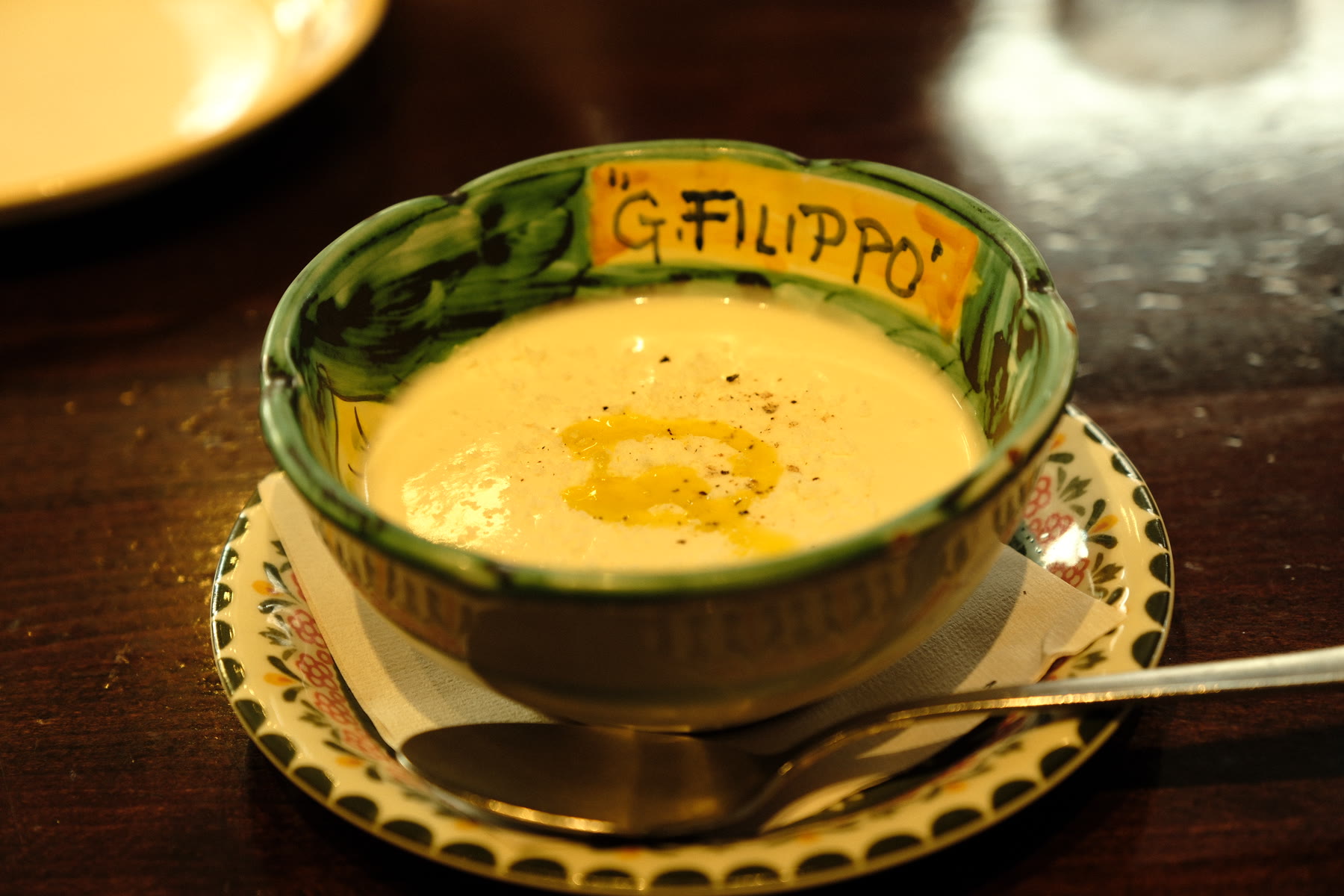
Restaurant light is often mixed: a warm overhead lamp, cooler window light, and reflections from a colored table. A white-balance adjustment that makes the bowl mathematically white can erase the atmosphere that made the scene worth photographing.
On the X-H2, Auto White Balance includes White Priority and Ambience Priority choices for incandescent scenes; the camera also offers custom measurement and color temperature. Those are starting points for different intentions, not a ranking from accurate to inaccurate.
Set a reference before the food changes
Make a quick frame of a neutral napkin or plate under the same light as the dish, if one is actually neutral. Do not sample a cream glaze or colored paper as a neutral target. If the table has both window and tungsten light, note which source illuminates the food.
Try Auto, White Priority, and Ambience Priority on a still dish and compare the food as well as the whites. White Priority can suppress warm casts; Ambience Priority can preserve them. The better choice depends on the story of that room.
Keep RAW and JPEG roles clear
The camera JPEG records your chosen white-balance rendering. A RAF allows Lightroom to revisit the raw white balance more flexibly; it does not make a mixed-light scene have one objectively correct setting.
For a series at one table, a measured custom white balance or a chosen Kelvin setting can hold color consistent between frames. Revisit it when you move the plate toward a window or another lamp.
Edit the bowl and the meal separately
In Lightroom, choose the profile before fine-tuning Temperature and Tint. Use the bowl or napkin as a check, but judge whether the soup, herbs, and wood remain believable. A globally cool correction may produce a clean plate and unappetizing food.
If a window lights one side and a lamp lights the other, use a restrained local mask only when the difference distracts. Preserve some warm-to-cool separation rather than painting both sides the same neutral color.
Export-check a small set
Compare three photographs under the same lighting at the same viewing size. Match broad white and food relationships, not identical RGB values for different dishes.
Export one web JPEG and inspect it outside the Lightroom edit view before saving a preset. Scene-specific white balance should remain adjustable even when the creative color direction is shared.
Sources and further reading
References for the context and techniques discussed in this field note.