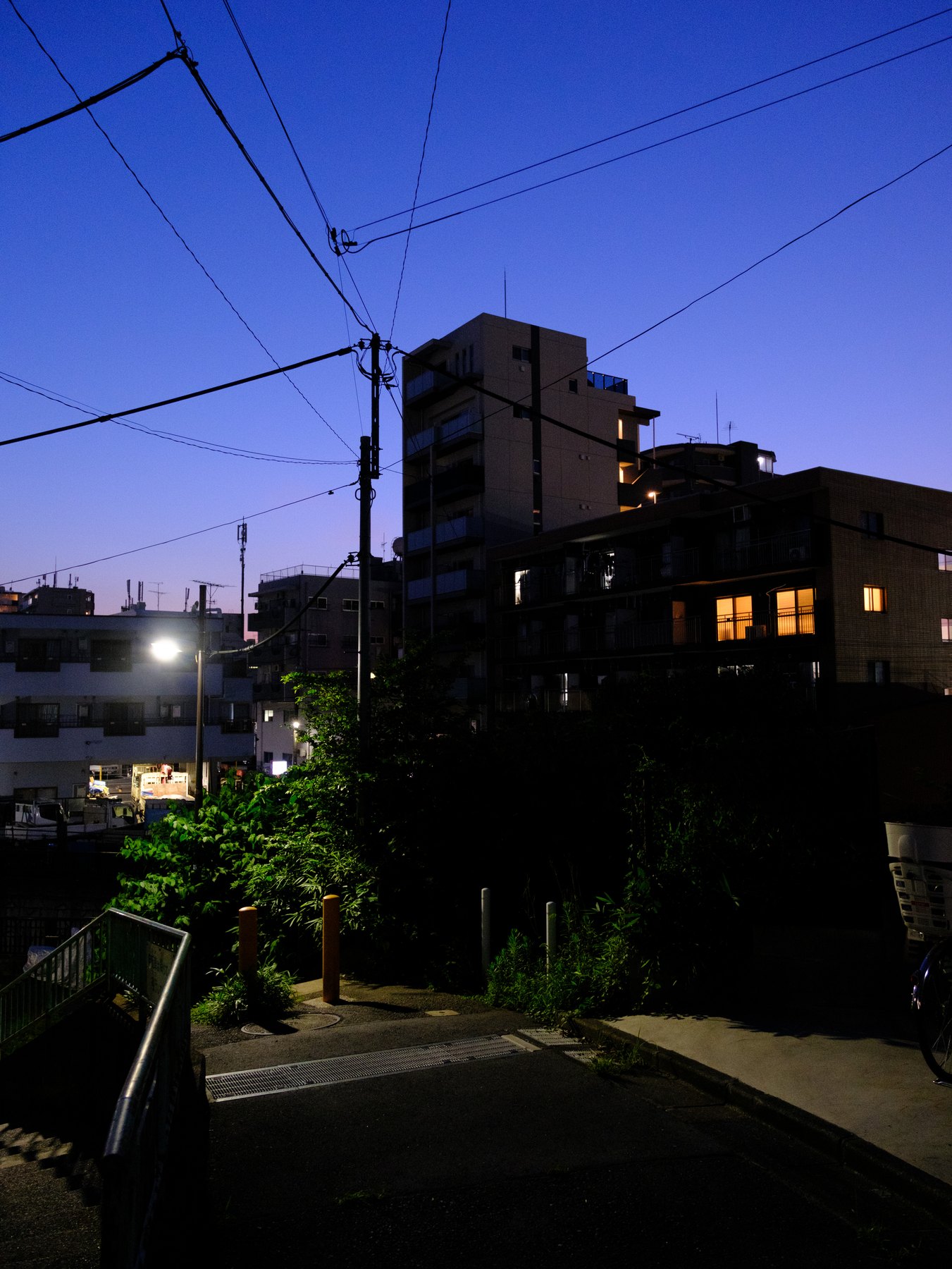
Tokyo streets often combine cool sky, warm windows, fluorescent interiors, and colored signs in one frame. A single global white balance cannot make every source neutral.
RAW gives you flexibility, but the goal still needs to be chosen: believable skin, consistent architecture, a warm interior, or the emotional color of the street.
Choose a priority reference
Use skin, gray pavement, white fabric, or another known surface near the subject. Adjust Temperature until that reference feels plausible, then use Tint for a smaller green–magenta correction.
Do not sample a colored reflection or illuminated sign unless you want that source to define the whole frame.
Auto WB versus fixed Kelvin
Auto White Balance is responsive while walking and often produces a useful starting point. Fixed Kelvin makes a sequence more consistent when the dominant light stays stable.
RAW lets either choice be refined later. JPEG shooters should test the environment and consider a saved custom shift only when it solves a repeatable problem.
Correct people locally
When a face sits under different light from the background, global correction can damage one to repair the other. Use a restrained subject mask to adjust temperature or tint locally.
Keep some color from the environment on the subject. A perfectly neutral face inside strongly colored light can look pasted into the scene.
Grade after white balance
Only after the reference colors feel believable should you add a warm–cool grade or reduce a dominant hue. Otherwise the creative grade compensates for a correction that may change later.
Review adjacent frames together. Small white-balance differences can break a sequence even when each image looks acceptable alone.