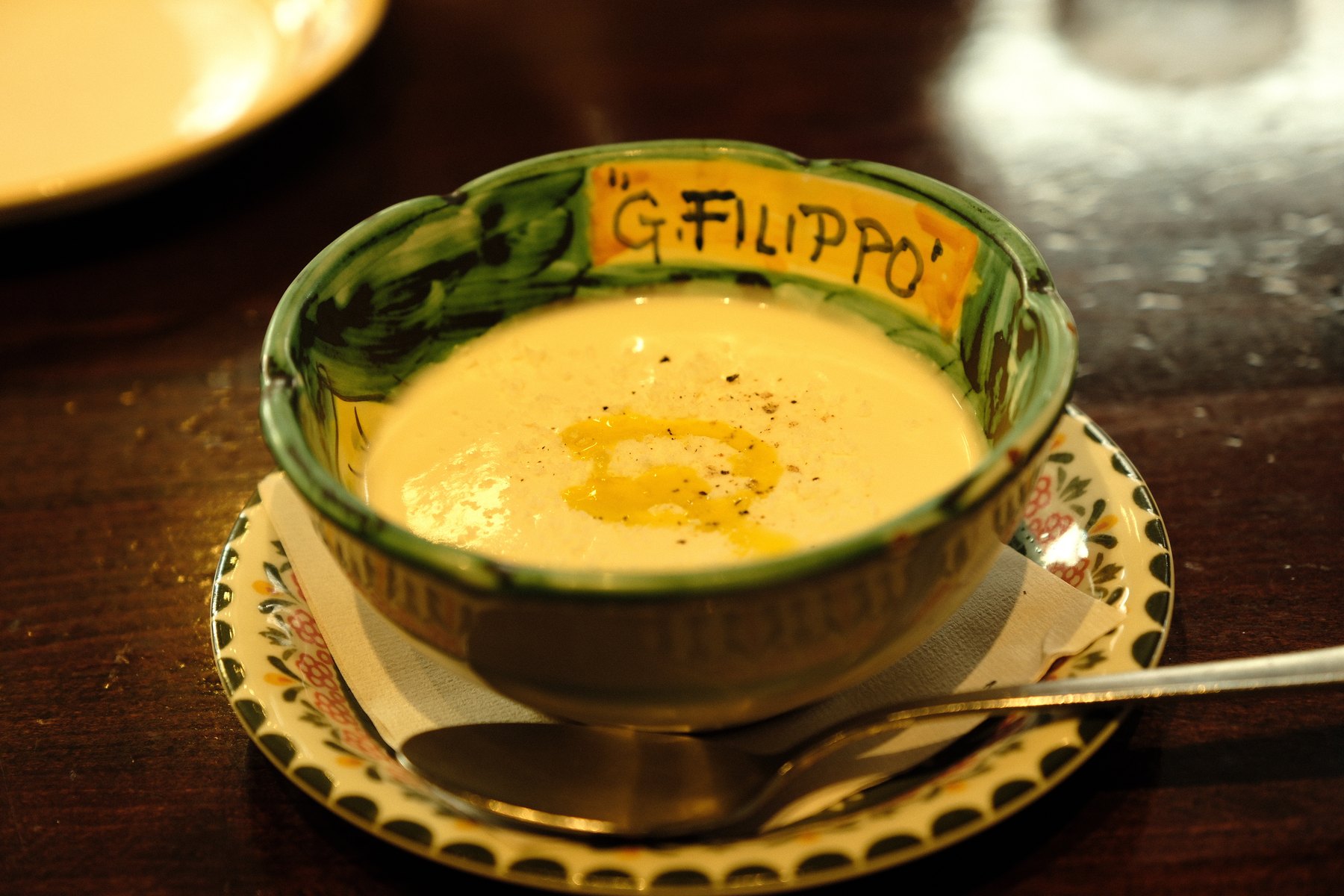
Warm still-life scenes often contain small bright reflections beside dark wood. An average exposure can make the table readable while removing shape from glaze, soup, or metal.
Treat warmth as a relationship among surfaces. The goal is not to make a white napkin perfectly neutral at any cost, but to prevent one yellow cast from erasing material differences.
Choose the surface that must retain shape
Identify the brightest important reflection on the bowl, liquid, or spoon and make a reference exposure. Tiny specular points can clip; the larger highlight should still describe curvature.
If the table becomes dark after protecting the subject, change angle or add a reflector before lifting every shadow in post.
Use a neutral object as a check, not a command
A napkin or plate can reveal how warm the light is, but neutralizing it completely may make the food and room look cold. Set white balance until materials separate while the atmosphere remains credible.
Compare the neutral reference with the highlights on metal and ceramic. If all three drift toward one hue, correct globally before reaching for saturation.
Refine color locally in Lightroom
Use Point Color or a restrained mask when only the soup, glaze, or tabletop needs correction. Broad yellow and orange moves can change food, wood, and skin at the same time.
Check the exported JPEG at normal size. Warm gradients can band or look muddy after compression even when they appear smooth in Develop.
Describe only the photographed frame
Record camera settings only from the original metadata. Do not present one exposure as proof of a universal restaurant setting.
The photograph shown here demonstrates visual checks, not a bracketed test of Fujifilm photometry modes.
Sources and further reading
References for the context and techniques discussed in this field note.