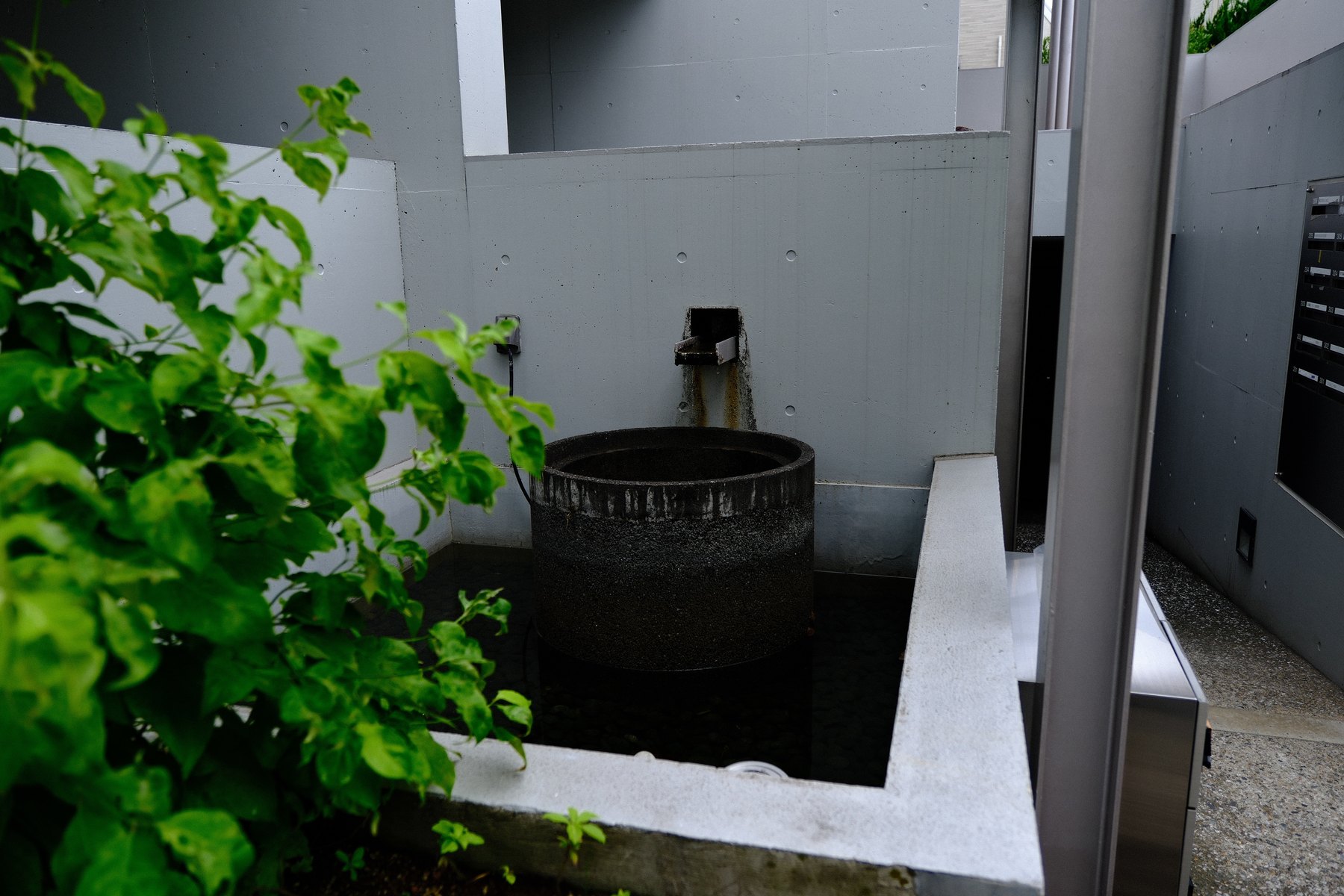
The Japanese word ma can refer to an interval, gap, pause, room, or timing. It is broader than a graphic-design rule and should not be treated as proof that Japanese pictures are naturally minimalist.
For photographers, ma becomes practical when you ask how distance and timing shape a relationship: the pause before someone enters a doorway, the space between two gestures, or the silence separating frames in a sequence.
Compose the relationship, not the blank area
Identify two active elements and examine what happens between them. A person and a sign, two commuters, a shadow and a doorway, or a near object and a distant building can make the interval legible.
Empty space without tension is merely unused frame. Shift your position until the gap clarifies scale, anticipation, separation, or movement.
Let time enter the composition
Hold a stable frame and watch several cycles of movement. Notice when the interval opens, compresses, or disappears. The strongest moment may occur before or after the obvious gesture.
Sequence three photographs when one frame cannot describe the change. Ma can live between images as much as inside one image.
Edit for breathing room
Crop only after deciding which interval carries meaning. Avoid increasing contrast everywhere; local emphasis can preserve a quiet transition while keeping the subject readable.
Review the image beside a visually dense frame. The rhythm between them may reveal more than either photograph alone.
Sources and further reading
References for the context and techniques discussed in this field note.