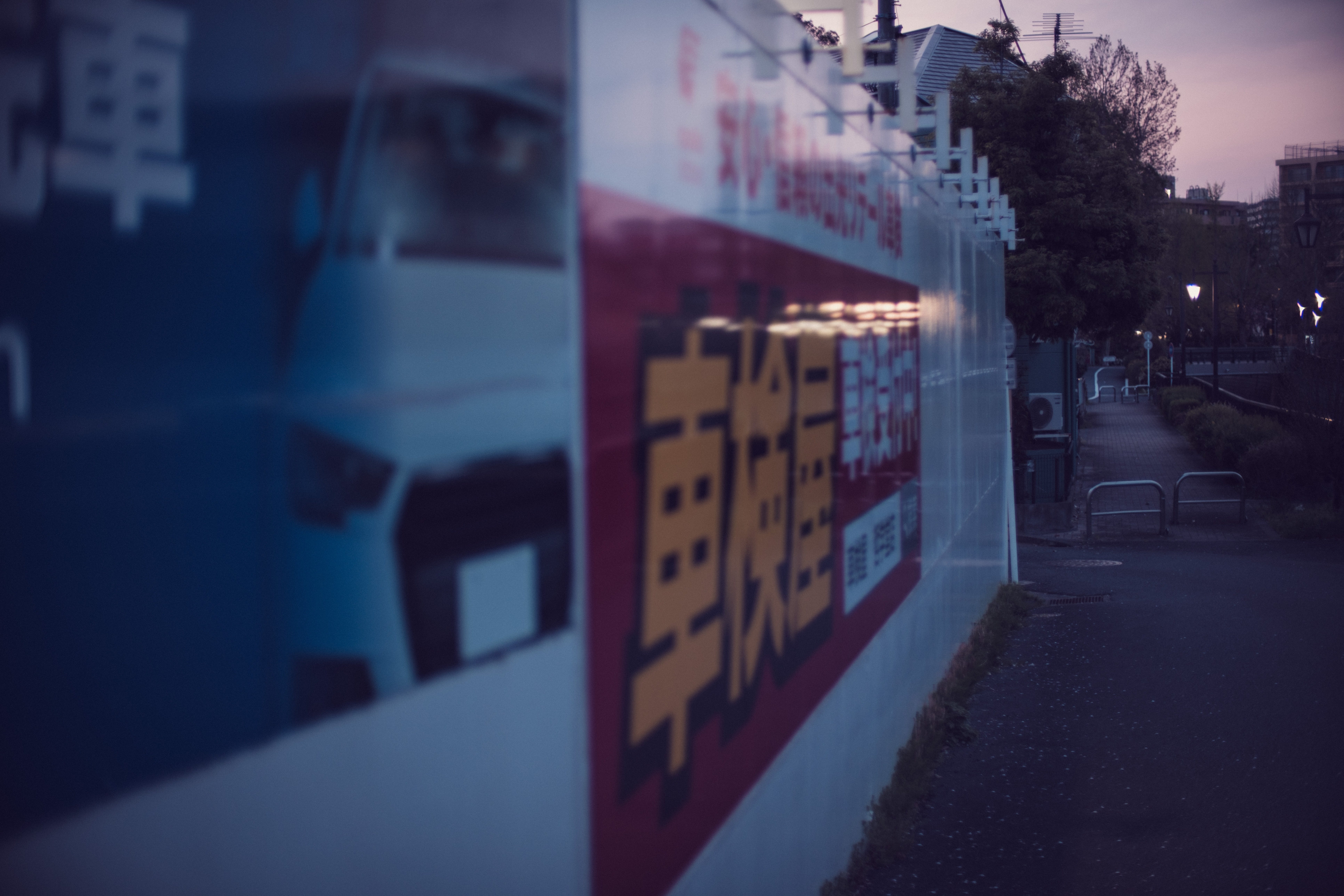
Tokyo blue hour photography: working with a short transition.
Blue hour is valuable because several light systems briefly meet—not because every shadow must become blue.
The useful window changes by season, weather, orientation, and how buildings block the horizon. Arrive before the color appears and identify where ambient sky and practical light can share the frame.
Treat the period as a sequence, not one setting.
Prepare one composition early
Choose a frame with visible sky and meaningful artificial light. Set a safe minimum shutter speed for people and allow ISO to rise as the balance changes.
Make a reference frame every few minutes. The sequence teaches more than chasing multiple locations.
Protect color, not every highlight
Expose for the subject and preserve highlights whose hue or shape matters. Some bulbs and signs can clip without harming the picture.
RAW gives room to adjust white balance, but do not neutralize the warm-cool relationship that defines the transition.
Edit the series chronologically
Correct exposure per frame, then apply a restrained shared curve and color direction. Keep the sky’s change visible across the group.
Stop when local adjustments begin making every frame look captured at the same minute.
Sources and further reading
References for the context and techniques discussed in this field note.
Tokyo Grain runs Google Analytics by default, unless you have disabled it, to understand which photography guides are useful and improve this website. You can disable Google Analytics at any time below. Advertising storage remains denied.
Microsoft Clarity remains off unless you explicitly enable it below. If enabled, it may create privacy-masked session replays.
These settings could not be saved. The current page remains available, but your choice may not be remembered on another visit.